

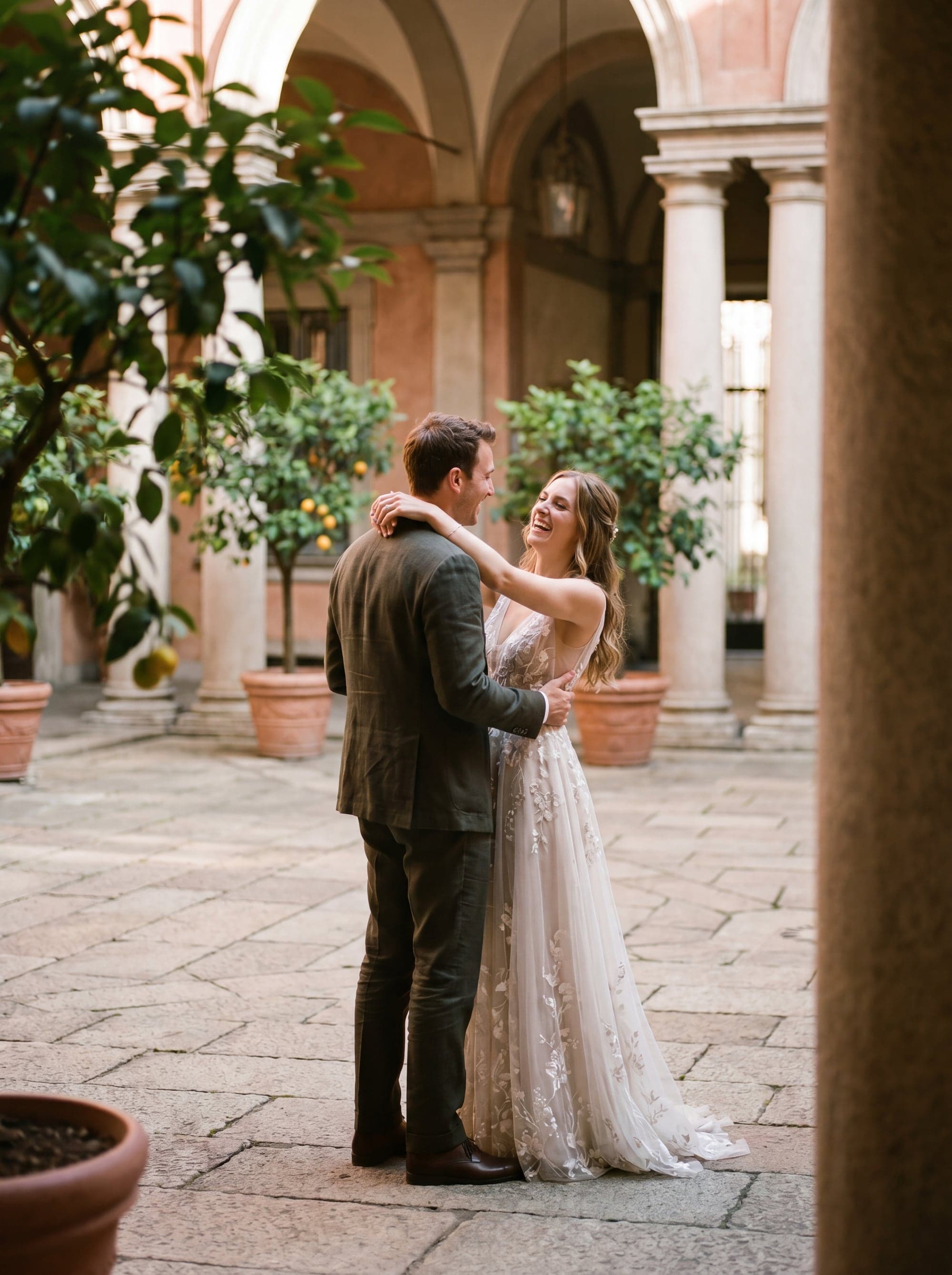
Giulia & Marco · Milano
A big, loud, loving family, a hundred opinions, and a first dance the whole room got to choose.
An illustrative story — representative of how couples plan with bridecard, not a specific customer.
Too many cooks, lovingly
Giulia and Marco have the kind of family that arrives early, in numbers, with opinions. The first-dance song became a small campaign — one uncle lobbying hard for his track, a sister who would not be moved off hers. The menu was its own negotiation, made trickier by the aunts and cousins who had things they couldn't eat and were far too polite to say so. And 'elegant', written once on the save-the-date, somehow meant five different things to five different cousins — two of whom kept texting, in earnest, to ask whether it meant a tie.
"We let the family vote, and the day felt like it belonged to everyone."
Letting the family decide
Rather than referee all of it, they handed a few decisions back. The first dance went to a real vote on their page — the uncle's song, the sister's, a couple of dark horses — and the result settled it without anyone losing face. The menu got a page of its own, every course laid out, the dietary bits marked, so the relatives who didn't want a fuss could quietly tap what they needed. The dress code got a few plain sentences. And the tie question got answered once, on the page, instead of forty times in the family chat.
On the day
The first dance played and the room roared — partly because half of them had voted for it and wanted to be proven right. The kitchen already knew who needed what, so the right plates arrived at the right seats without a word. And everyone, somehow, had dressed for the same wedding. The opinions hadn't gone anywhere, of course. They'd just found somewhere to land before the day, rather than during it.
- Guest voting for the first dance & more
- A menu page with dietary options marked
- A dress code section in plain words
- One place for answers, not forty in the chat
FAQ
bridecard has a voting feature where you post a question — the first-dance song, for instance — and guests pick on the invitation. The tally is live and visible. Giulia and Marco put the first dance to a vote, and a decision that was turning into a family feud just resolved itself.
There's a dedicated menu page where you list each course and mark dietary options. Guests can see what's being served and flag what they need quietly, in advance — which suited Marco and Giulia's relatives who didn't want to make a fuss but did need the kitchen to know.
Give it its own section and say it plainly. A word like 'elegant' means different things to different guests, so a short, clear note saves the back-and-forth. Once Giulia and Marco spelled it out on the page, the 'does this mean a tie?' texts stopped.
Paper is lovely to hold, but it can't take a vote, update a menu, or answer a dress-code question. A bridecard page does the parts that change and respond — voting, dietary notes, a code people can re-check — which is exactly what a big, opinionated guest list needs.
Start your own card
Your invitation is fifteen minutes away. Your guests are going to love it.